
It was also back to the very familiar photographic territory of exploring the town’s historical architecture:
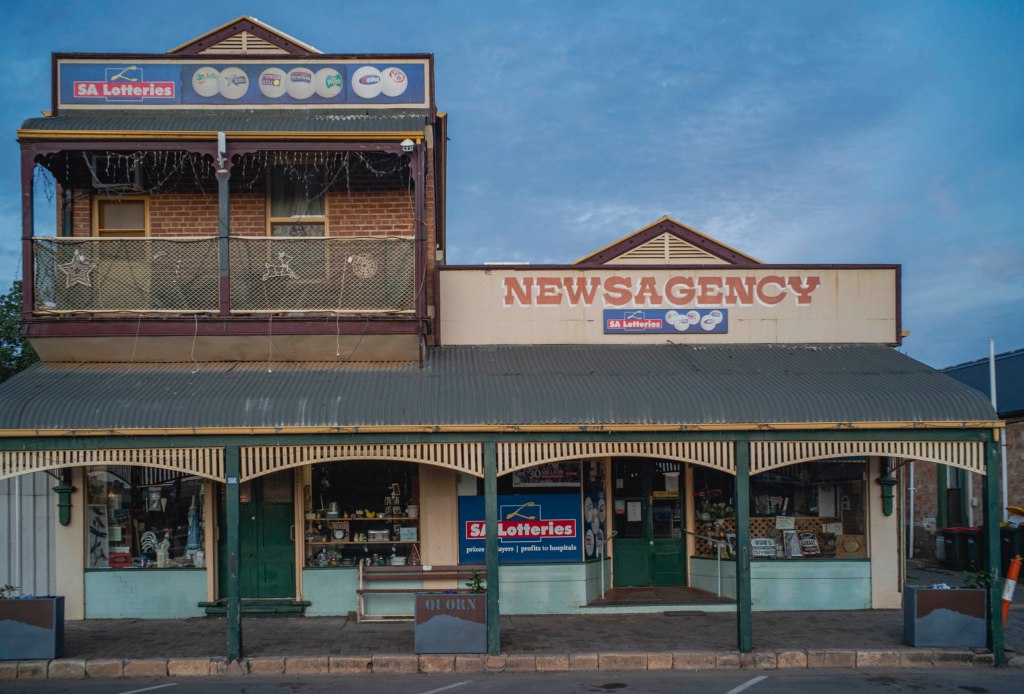
The colonial settlement project was such a long way from the deep time of the geological history of the Vulkathunha-Gammon Ranges that we had been immersed in. It was hard to connect the two. There was actually a jarring disconnection.
What was also so very noticeable was the silence about the long history of the Nugunu people whose traditional lands ranged from near Crystal Brook to north of Quorn, the frontier battles, and the existence of the Christian Colebrook Home in Quorn (from 1927 to 1944) that was operated by the United Aborigines Mission as an institution for Aboriginal children. Its purpose was to remove the children from the influence of their aboriginal families, and to ‘civilise’, them so that they could be more easily assimilated into white settler society.
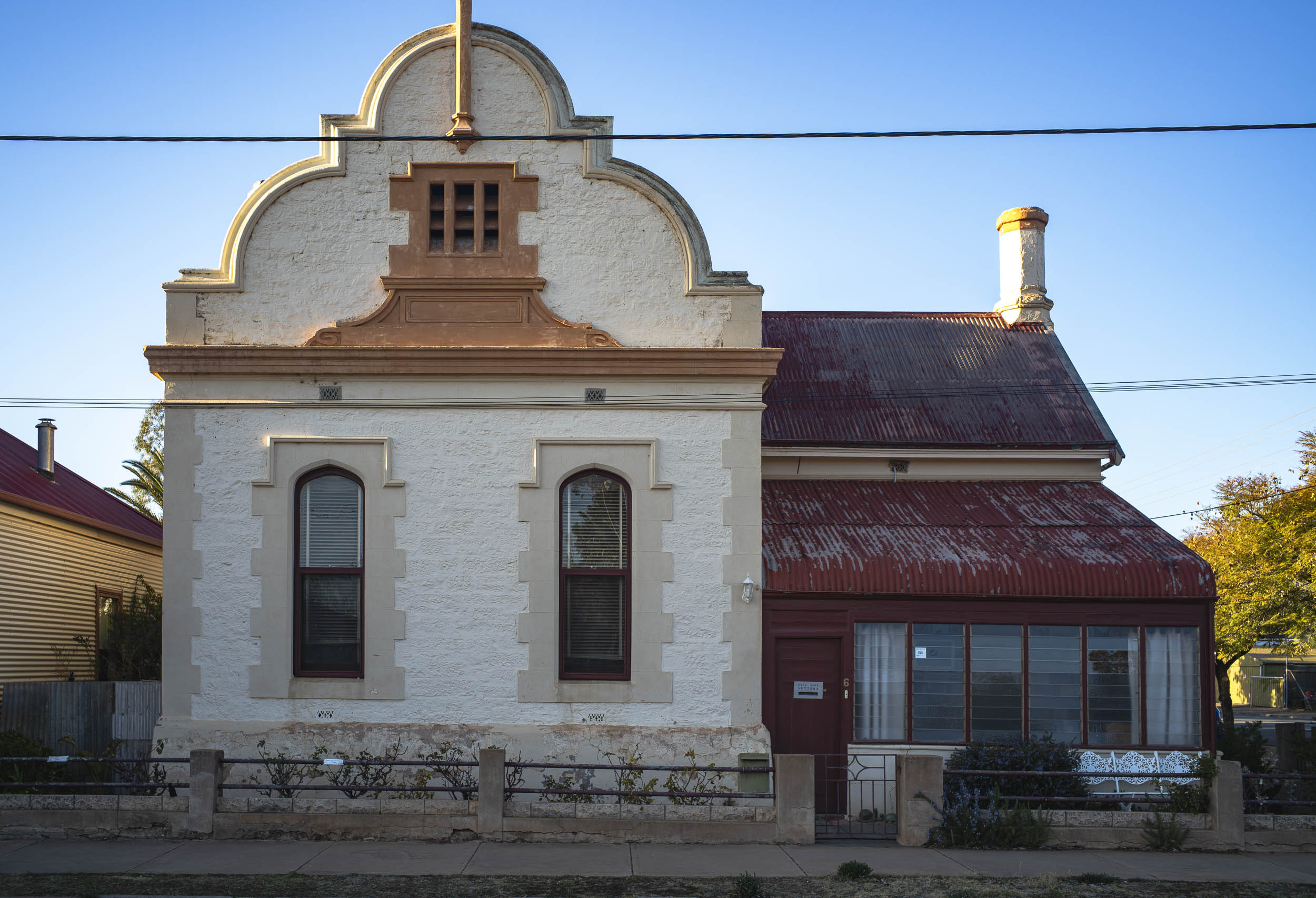
The pioneer settler horizon of Quorn’s history was narrow. It was basically 150 years of white development history that justified the colonial settlement project with a silence about its violent foundations. I found it stultifying and claustrophobic.
It was turned in on itself whilst denying that the colonial project embodied a centuries-long, ongoing campaign to annihilate, define, subordinate and exclude the ‘native’/’blacks’/’savages’. It was premised on the distinctions made between civilized and non-civilized and it made no space to recognise Indigenous autonomy. The sovereignty of First Nations was displaced and ignored, as though it had never existed prior to the colonial invasion.
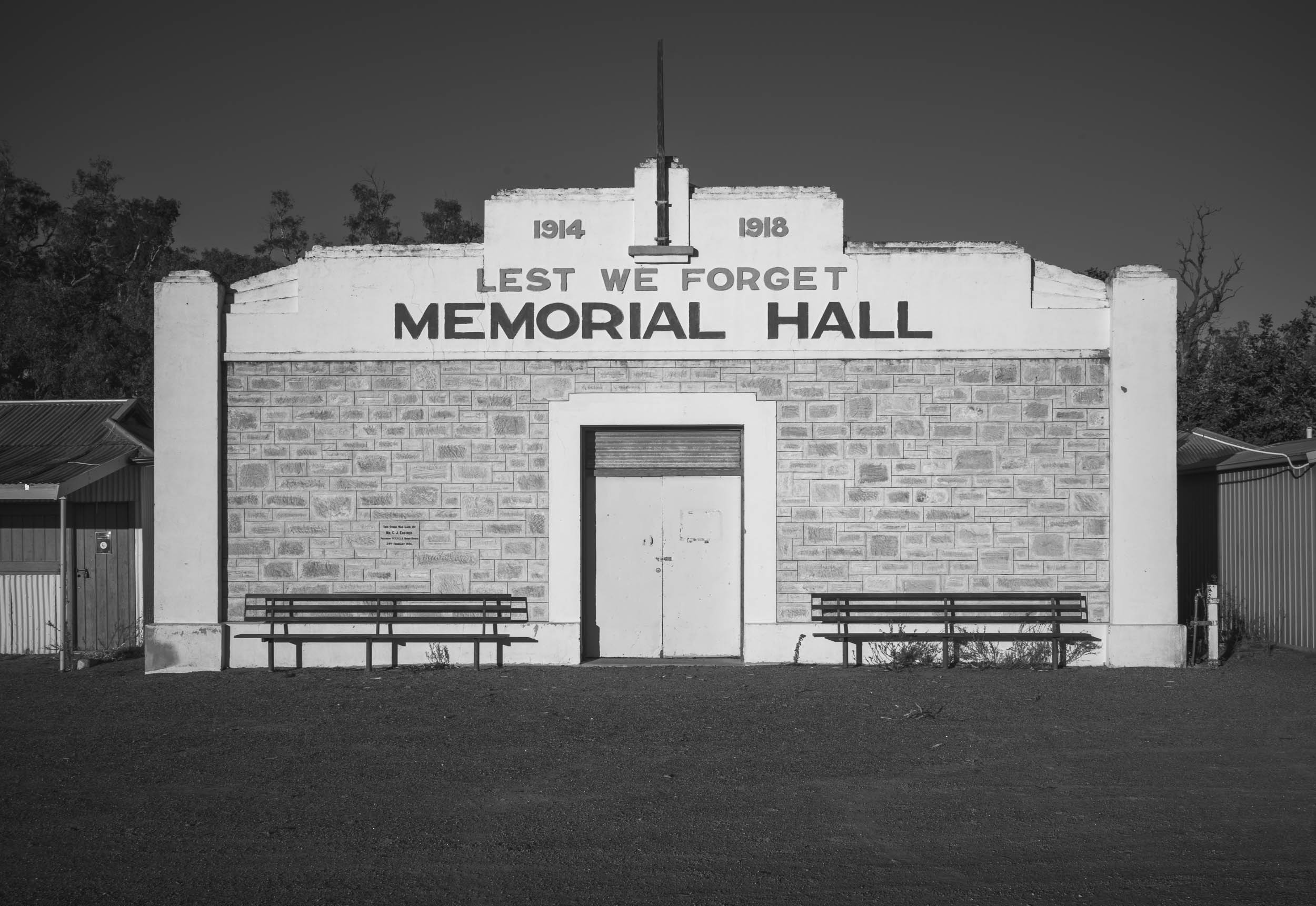
The colonial project is about ensuring that the Aboriginal relationships to all things Indigenous are inevitably extinguished, or reach a point where the Indigenous are absorbed into the linear history of ‘progress’. Positivist jurisprudence positioned the ‘civilized’ European state as sovereign and the ‘uncivilized’ non-European as lacking in sovereignty; this constructed difference was used by the ‘civilized’ Australian state to deny the ‘uncivilized ‘ First Nations peoples any legal personality or sovereignty.
 The Long Road to the North
Leave a comment